
This week was all about an hour of code! In the past, I have watched the AVID students at my school complete an hour of code and although it’s not my “cup of tea,” I did like the problem solving aspect of it because problem solving is an important life skill. According to the School Library Journal, “With this in mind, the focus of coding education is shifting from teaching the specific skill of coding to teaching computational thinking—or the ability to follow a step-by-step process to solve a problem” (Snelling 2018). I loved this quote because they can take this skill and apply it to life as well, since Snelling goes on to say computational thinking and coding intertwine (Snelling 2018). Students get so overwhelmed with multistep directions, but coding can help them learn to break things down into smaller steps and take it one step at a time. I liked this article because it talks about just how many jobs use coding but how very little high schools offer coding as a class, so us librarians can offer it in our library! With technology always on the rise, it is important for students to code since “According to Code.org, there are more than 503,000 open computing jobs nationwide,” (Snelling 2018).
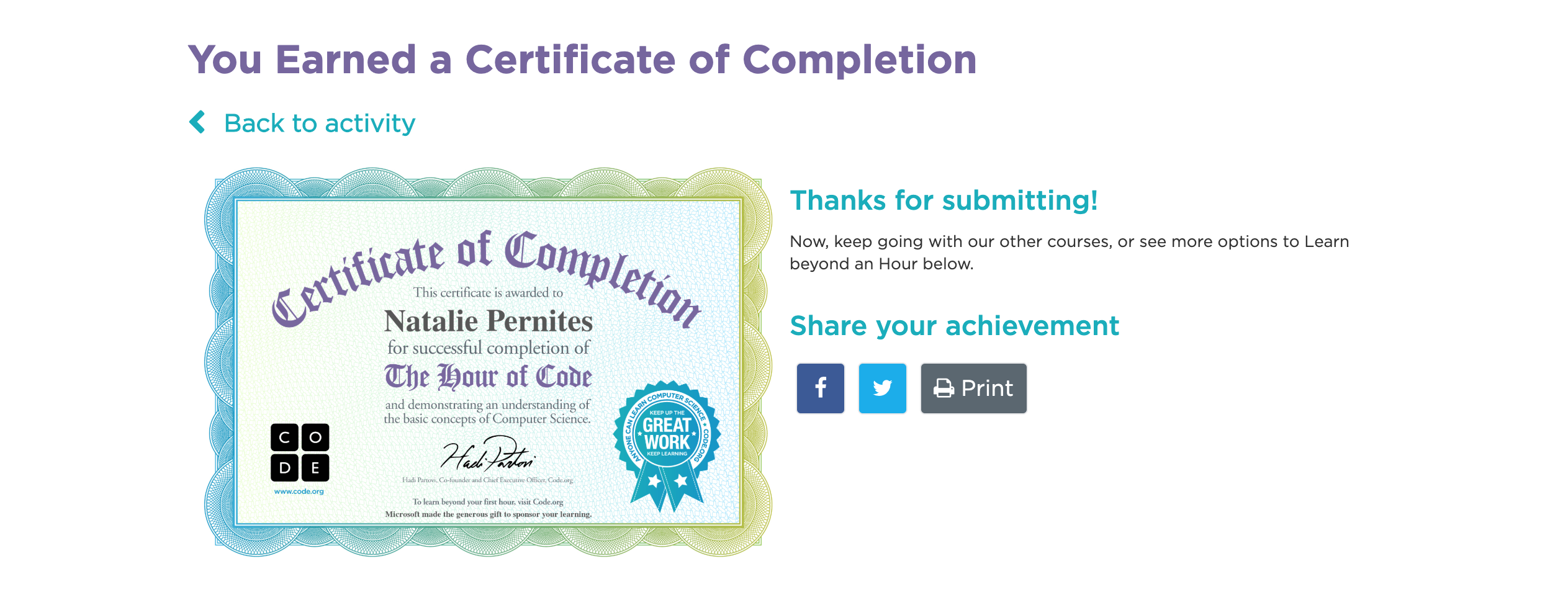
When I did the hour of code (since I am a beginner), I did the flappy bird activity first. That one was very easy, so I decided to up my game a little. I did the Anna and Elsa activity, and that one got hard for me. When my timer went off, I was stuck on level 14. Level 6 took me an awful long time, but I did it! Click here to see it! What I did like about both of these activities though, is they took it step by step and could give you hints if you needed them. These activities definitely used the four computational thinking skills, but the main one I feel like it hit on was decomposition. The article “Computational Thinking Across the Curriculum states, “With the power of decomposition, problems that seem overwhelming at first become much more approachable for students” (Sheldon, 2017). I definitely felt overwhelmed when I logged into code.org. As someone who isn’t super into coding, there was A LOT on there. When I picked my activities, I like that each level took it step by step and did one skill at a time to help ease you into harder skills.
What I also liked about this article is the advice it gave. It says, “Introduce some ambiguity in your projects, link lessons to real-world examples and evidence, and dream big” (Sheldon, 2017). I can apply this both in my classroom now and in my future library.
References
Sheldon, E. (2017, March 30). Computational thinking across the curriculum. Retrieved from https://www.edutopia.org/blog/computational-thinking-across-the-curriculum-eli-sheldon
Snelling, J. (2018, April 3). Don’t stress about coding: Focus shifts to teaching problem solving not computer skills. Retrieved from https://www.slj.com/?detailStory=dont-stress-coding-focus-shifts-teaching-problem-solving-not-computer-skills

 Natalie Pernites
I loved both of those articles and agree that they hit home on the major points! Like Sheldon and Snelling said: if students can begin to master these concepts it will make other academic tasks easier. For example, once students begin to really latch onto decomposition, then multistep word problems will become less intimidating. Therefore, it key is to start instilling these skills in students at a young age. Hour of Code games are certainly a fun and engaging way to help students strengthen their decomposition and critical thinking skills!
– Lauren B.
LikeLiked by 1 person
I do agree that coding and problem solving will translate into the real world. I think it is a fun and interesting way to teach students that skill. I also liked the part in the article about breaking it down. I was so overwhelmed at first, but in the end it was awesome! Great job on your bird.
LikeLiked by 1 person
Wow, really great job connecting to the articles, very natural 🙂 I think hour of code can br very easily integrated into math, it is all there, problem solve, decompose, plan it out. I want to go back in and try some the science ones and see how those connect.
LikeLiked by 1 person
Natalie! Coding reminds me of when I was in Middle School. Picture it is was 1992 and I was sitting in typing class. The teacher handed us directions to use on the typewriter. The goal was to use different letters, numbers, symbols and spaces to create a picture. Can you imagine typing 2 spaces, 59 periods, and 2 more spaces just to complete line (1). Oh man it was difficult at that time and now it just seems like an easy breezy task. Unfortunately for me, coding was a major struggle.
LikeLiked by 1 person